
For anglers in search of the largest peacock bass in the Amazon and beyond, Rio Marié is the ultimate destination, offering an unparalleled peacock bass fishing experience deep within the Amazon rainforest. Famous for its giant peacock bass and trophy-sized catches, Rio Marié consistently produces some of the largest peacock bass specimens ever recorded, with many catches exceeding 20 pounds. As a globally renowned fishing destination, Rio Marié holds multiple IGFA world records, including the largest peacock bass caught on fly fishing tackle.
Recent years have seen Rio Marié continuously set and surpass its own records—a testament to its unmatched fishing potential. In 2017, angler Florian Kaiser captured a remarkable 28.5-pound, 89 cm peacock bass, only to be surpassed by Rodrigo Salles’ 91 cm catch in 2021. The trend continued, with records broken in 2022 and again in 2023, when South African angler Brent Von Nerkerk landed an astonishing 94 cm peacock bass, marking a new world record and solidifying Rio Marié’s reputation as the best destination for peacock bass fishing.
For those planning a memorable peacock bass fishing trip in South America, Rio Marié offers an unmatched chance to land a world-record peacock bass using either lures or fly fishing techniques. Situated in the heart of the Amazon, this destination combines thrill and adventure, immersing anglers in the untouched wilderness of the jungle as they pursue some of the most prized peacock bass specimens on the planet. The Rio Marié provides an extraordinary fishing experience, where anglers come face-to-face with giants, all set against the breathtaking backdrop of the Amazon rainforest.
It’s hard to argue with the facts: the Rio Marié is the finest trophy peacock bass fishery on the planet.
Since 2014—when the Indigenous communities of the Upper Rio Negro first opened their waters to our anglers—nearly half of all guests who have fished the Marié have landed a true giant peacock bass over 20 pounds.
What sets the Marié apart from every other jungle fishery is our singular dedication to pursuing world-class, record sizes peacock bass.
Year after year, more 20+ pound fish are caught here than in the next five top peacock bass fisheries combined. This river continues to produce extraordinary specimens, including multiple IGFA world records.
Among the most remarkable achievements:
-
2017: Florian Kaiser lands a 28.5 lb giant — at the time, the largest peacock bass ever caught on fly.
-
2021: Rodrigo Salles sets the IGFA All-Tackle Length Fly World Record with a 91 cm peacock bass.
-
2022: Rodrigo surpasses his own record with another trophy measuring 92 cm.
-
Current Record: The Marié now proudly holds a 94 cm IGFA All-Tackle Length World Record — caught by Brent Van Niekerk from South Africa, the largest peacock bass ever recorded on fly and the biggest documented in the Amazon to date.
For those who want to explore the official IGFA records associated with the Rio Marié, please visit:
IGFA World Records Database.
There is simply no other place with a higher concentration of true giants nor a better-protected, strictly managed trophy peacock bass fishery.
The Rio Marié remains the ultimate proving ground for anglers seeking the biggest peacock bass in the world.
Unique Guiding Experience
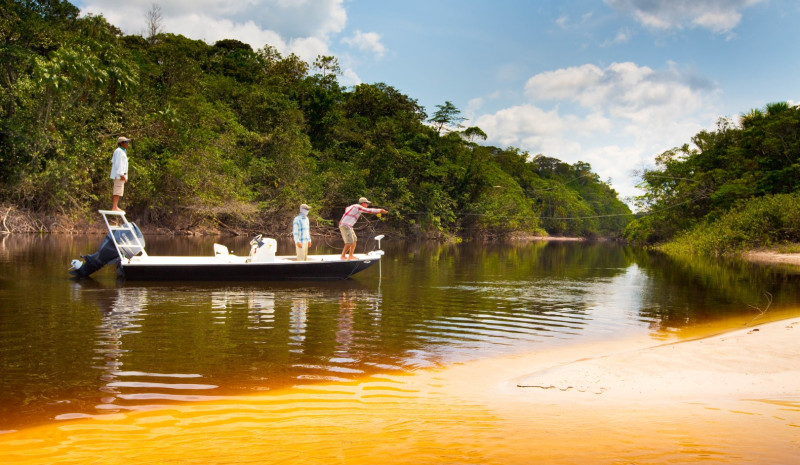
Guests are guided by one of the finest teams of English-speaking, fly savvy fishing experts in all of Latin America. Local indigenous guides who know every inch of water will assist in guiding you to the areas with the biggest peacock bass. We consider our guide staff elite peacock bass whisperers; a team of highly trained, professional, and experienced guides equipped with ancient knowledge and contemporary methods of covering water and catching fish. We fish with two guides per boat, and have found it to be highly effective.
Fishing Season
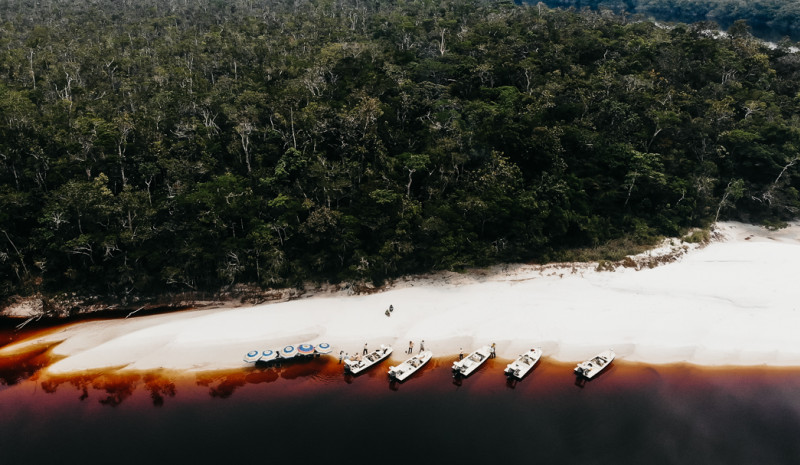
Our fishing season normally runs from from late July to December. This is the dry season for the upper Rio Negro Basin, the time when water is the lowest. Regular flows allow us to fish throughout the entire river system, including its numerous tributaries and lagoons. The Rio Negro Basin’s fisheries are recognized widely as dynamic, which is likely a product of each year’s hydrological cycles. Because of the geographic location and immensity of its drainage, the Rio Marié is much more consistent and predictable than other regional destinations.
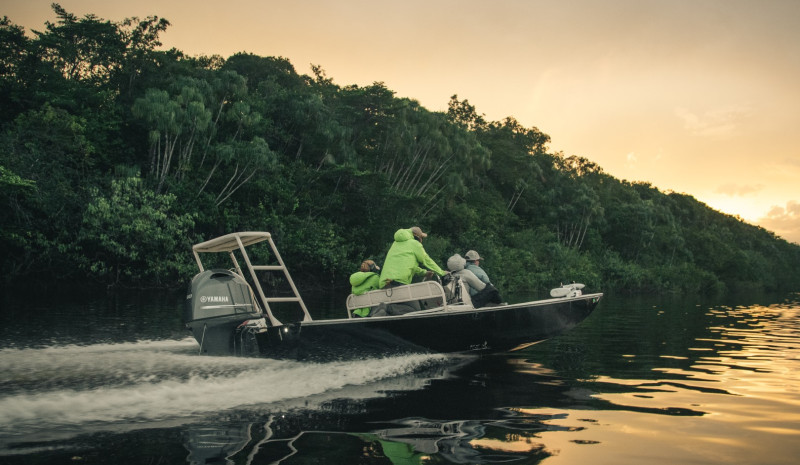
Superb Fishing Machines
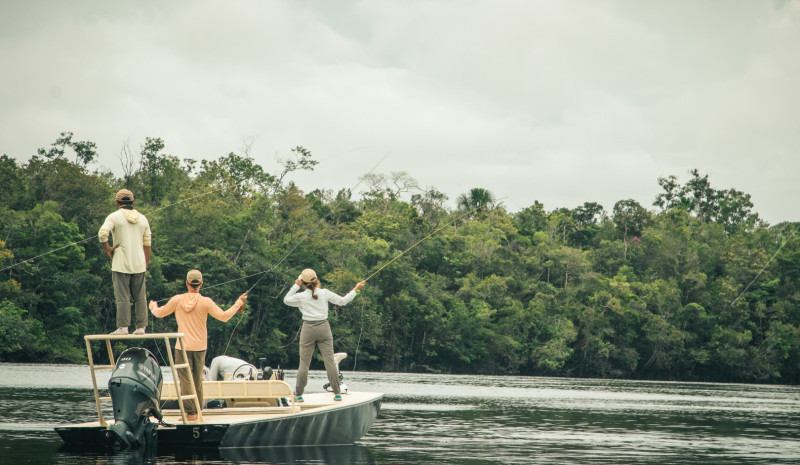
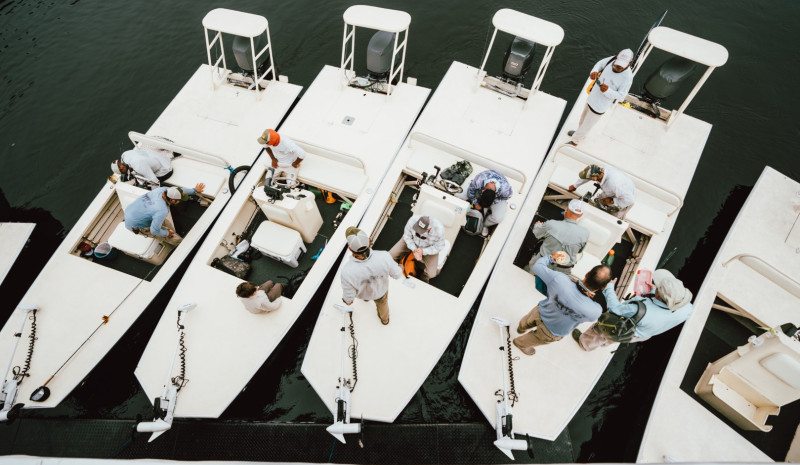
The Rio Marié skiffs are real fishing machines, designed by Untamed Angling to be the finest fly fishing boats in the jungle. Each skiff is equipped with 2 large casting platforms, a poling platform and an electric trolling motor with remote control, for silent movements inside the lagoons and along the river. 90HP four stroke Yamaha engines provide the skiffs their power to move long distances, and quickly. GPS and satellite phones are on board to keep guides in communication and aware of each other's position. Digital weighing scales, IGFA measuring devices and large landing nets are on board to help certify the next world record.

Other Species
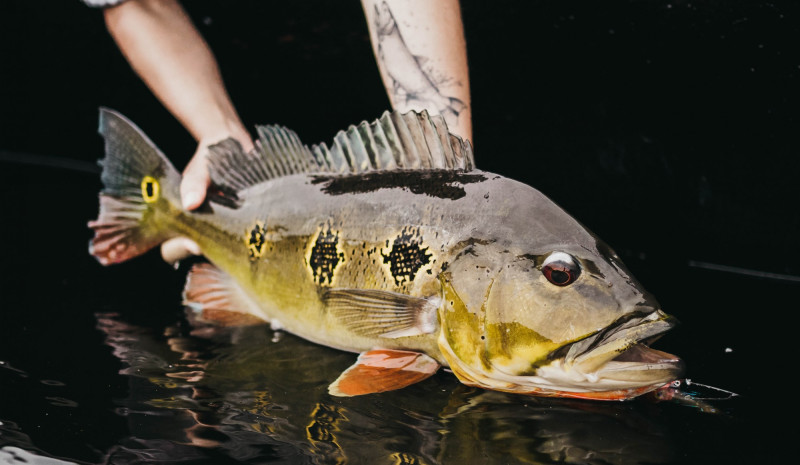
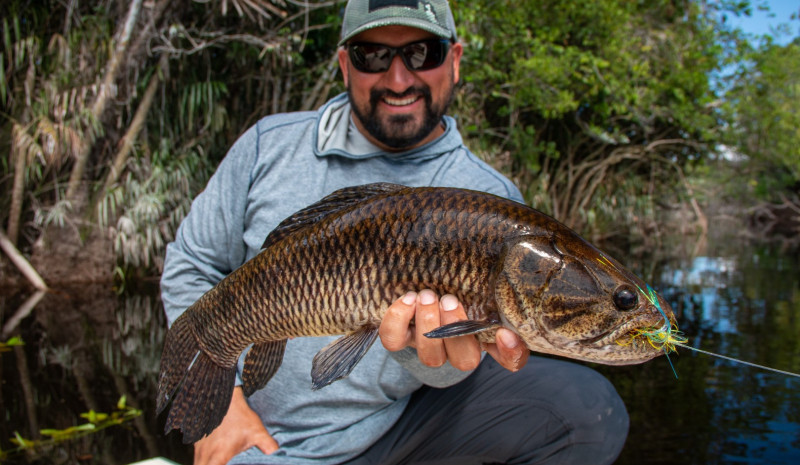
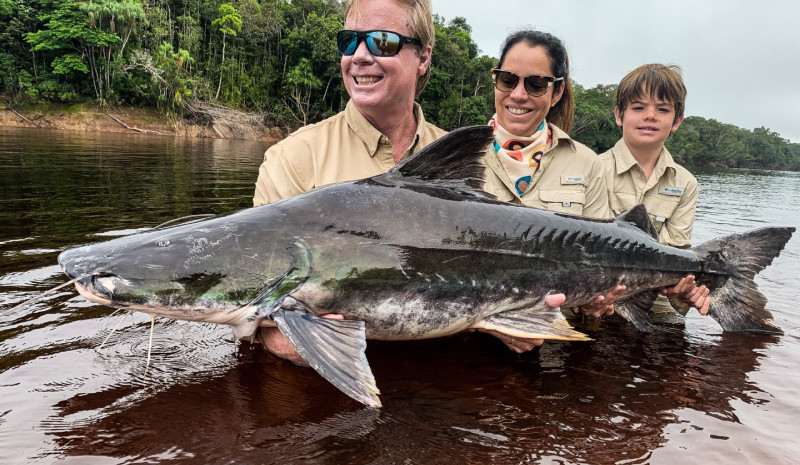
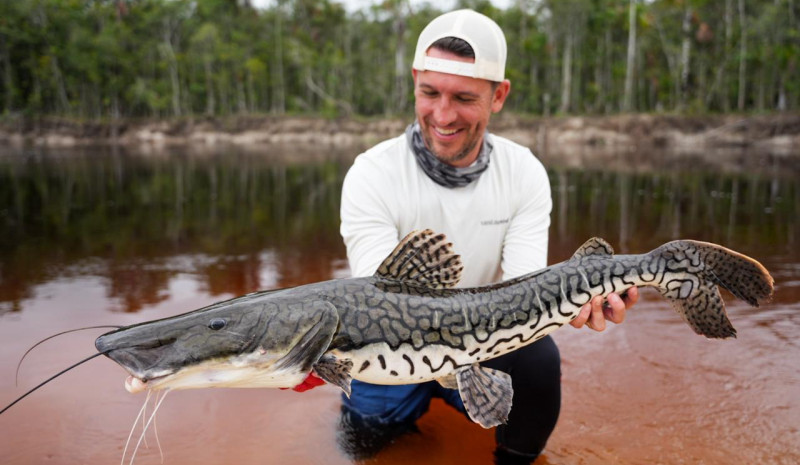
Trophy hunting is not the only thing that Rio Marié has to offer. Smaller varieties of these cichlids are also available, for the angler that wants to get their rod bent a little more often. Borboletas or butterfly peacock bass average in size from about 2 to 8 pounds and are a common occurrence in the Marié and other rivers in the Amazon. They´re great fighters, loads of fun, and anglers can rack up some numbers when found in schools. We also have shots to catch the black arowana and trairas. We also can fish for the stripped surubi and the monster piraíba is frequently found in Rio Marié, and a favorite of our guests when not with a fly rod.


The Pinawaca
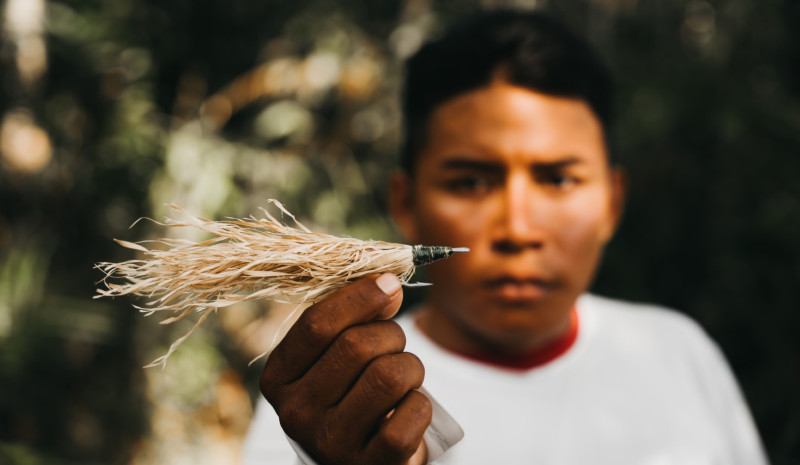
One of the truly absorbing things about the indigenous community of the Marié River is their local tradition of fly fishing for peacock bass. Indeed, what has been discovered about their approach to fly fishing for peacocks may cause historians of fly fishing to revise their theories about who really invented the sport and when. It is conceivable that some reassessment will be in order regarding the first practitioners of Tenkara fishing. Untamed Angling, it seems, has uncovered evidence that the indigenous peoples here used, as they call it, pinawaca flies, made from dried strips of wood to attract and catch peacock bass.
If you want to read more about the travel, logistics, gear of this incredible experience, check out our travel planner.